
A Beginner’s Guide to Stretching at Home
Stretching is a simple yet powerful way to improve your overall health, increase flexibility, and relieve tension in your muscles. You don’t need a gym membership or fancy equipment to start stretching; in fact, doing it at home can be convenient and just as effective. This beginner’s guide will walk you through the basics of stretching at home, helping you develop a routine that fits into your daily life.
Why Stretching Matters
Stretching helps maintain and improve your range of motion, which in turn supports better posture, reduces muscle stiffness, and lowers the risk of injury. Whether you spend long hours sitting at a desk or enjoy regular physical activity, incorporating stretching into your day can enhance your comfort and mobility.
When to Stretch
You can stretch at any time of the day, but here are some common options:
– Morning: Stretching after you wake up can ease stiffness and prepare your body for the day.
– Before Exercise: Gentle stretching before physical activity can warm up your muscles and reduce injury risk.
– After Exercise: Stretching after workouts helps muscles recover and prevents tightness.
– Evening: A relaxing stretch routine before bed can help you unwind and improve sleep quality.
Types of Stretching
Understanding the types of stretching can help you choose the right exercises for your needs.
Static Stretching
This involves holding a stretch for 15-60 seconds without movement. It’s effective for improving flexibility and is best done after your muscles are warmed up, like after a workout.
Dynamic Stretching
Dynamic stretches involve controlled, gentle movements that gradually increase your range of motion. These are ideal before exercise as they help warm up the muscles.
Ballistic Stretching
This type uses bouncing movements to push your body beyond the normal range of motion. It’s generally not recommended for beginners due to the risk of injury.
PNF Stretching (Proprioceptive Neuromuscular Facilitation)
PNF is a more advanced technique involving muscle contraction and relaxation. It usually requires a partner and is best learned under professional guidance.
For beginners, sticking to static and dynamic stretching is safe and effective.
Setting Up Your Stretching Space at Home
Creating a comfortable and distraction-free area will help you stay consistent. Here’s what you need:
– A flat, non-slip surface like a yoga mat or carpeted floor.
– Comfortable, loose-fitting clothing.
– Optional: cushions or pillows for support during certain stretches.
– A timer or clock to monitor hold times.
Basic Stretching Routine for Beginners
This routine focuses on major muscle groups and can take about 10-15 minutes. Remember to breathe deeply and never stretch to the point of pain.
1. Neck Stretch
– Sit or stand with your back straight.
– Slowly tilt your head to the right, bringing your ear toward the shoulder.
– Hold for 20 seconds.
– Repeat on the left side.
2. Shoulder Stretch
– Bring your right arm across your chest.
– Use your left hand to gently press your right arm closer.
– Hold for 20-30 seconds.
– Repeat with the left arm.
3. Chest Opener
– Clasp your hands behind your back.
– Straighten your arms and gently lift your hands upward while opening your chest.
– Hold for 20-30 seconds.
4. Triceps Stretch
– Raise your right arm overhead and bend your elbow to reach down your back.
– Use your left hand to gently press your elbow.
– Hold for 20 seconds.
– Repeat with the left arm.
5. Seated Hamstring Stretch
– Sit on the floor with your legs extended straight.
– Reach toward your toes while keeping your back straight.
– Hold for 20-30 seconds.
6. Quadriceps Stretch
– Stand near a wall or chair for balance.
– Grab your right ankle with your right hand and pull your heel gently toward your buttocks.
– Keep your knees close together.
– Hold for 20-30 seconds.
– Repeat with the left leg.
7. Calf Stretch
– Stand facing a wall, place your hands on it for support.
– Step your right leg back and press your heel into the floor.
– Keep your back leg straight and bend the left knee slightly.
– Hold for 20-30 seconds.
– Repeat with the other leg.
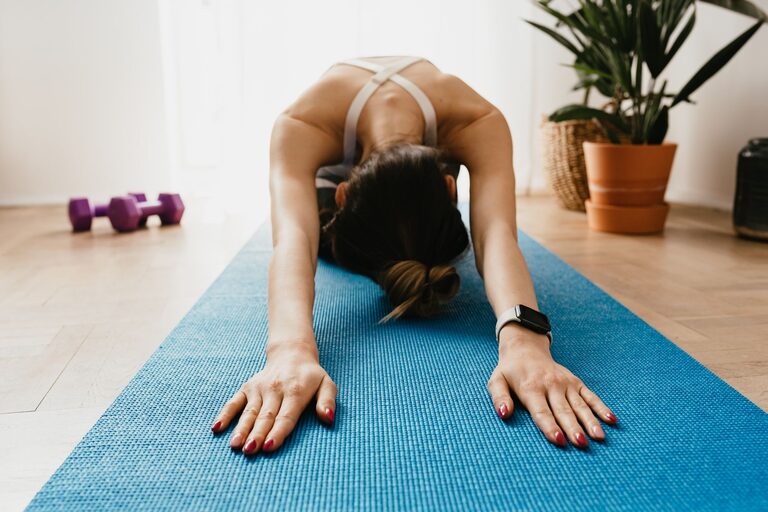
8. Lower Back Stretch (Child’s Pose)
– Kneel on the floor, sit back on your heels.
– Stretch your arms forward on the floor and lower your head between your arms.
– Hold for 30 seconds while breathing deeply.
Tips for Safe and Effective Stretching
– Warm up: Do light activity like walking for 3-5 minutes before static stretching.
– Go slow: Avoid bouncing or jerky movements.
– Breathe: Maintain steady, deep breaths to enhance relaxation.
– Consistency: Stretch regularly to see improvement.
– Listen to your body: Stop if you feel pain or discomfort.
– Stay hydrated: Drink water before and after stretching.
Common Mistakes to Avoid
– Stretching cold muscles: Always warm up first.
– Holding breath during stretches.
– Overstretching or forcing your body beyond its limits.
– Skipping stretches that target important muscle groups.
– Rushing through your routine.
Additional Resources
If you want to explore further, there are plenty of online videos, apps, and books designed for beginner stretching routines. Consider using guided sessions to ensure correct form and variety.
Conclusion
Starting a stretching routine at home is an easy and effective way to improve your flexibility, reduce muscle tension, and promote relaxation. By following this beginner’s guide, you can develop healthy habits that support your physical well-being without needing special equipment or a lot of time. Remember, consistency is key, so make stretching a regular part of your day and enjoy the benefits it brings!
